

Be Ready for
Tomorrow

Overview
Stands
Workshops
Sessions
Speakers


conference program
Lunch and networking
.webp)
Speakers and hosts
Keynote Talks
Prof. dr. Bas de Bruin, Director of the Van’t Hoff Institute for Molecular Sciences (HIMS) at the University of Amsterdam, will be delivering a warm and inspiring word of welcome to our audience.

Circular Carbon: Scalable Technologies for Competitive Growth
Market Manager Circular Carbon & Innovative Materials at TNO
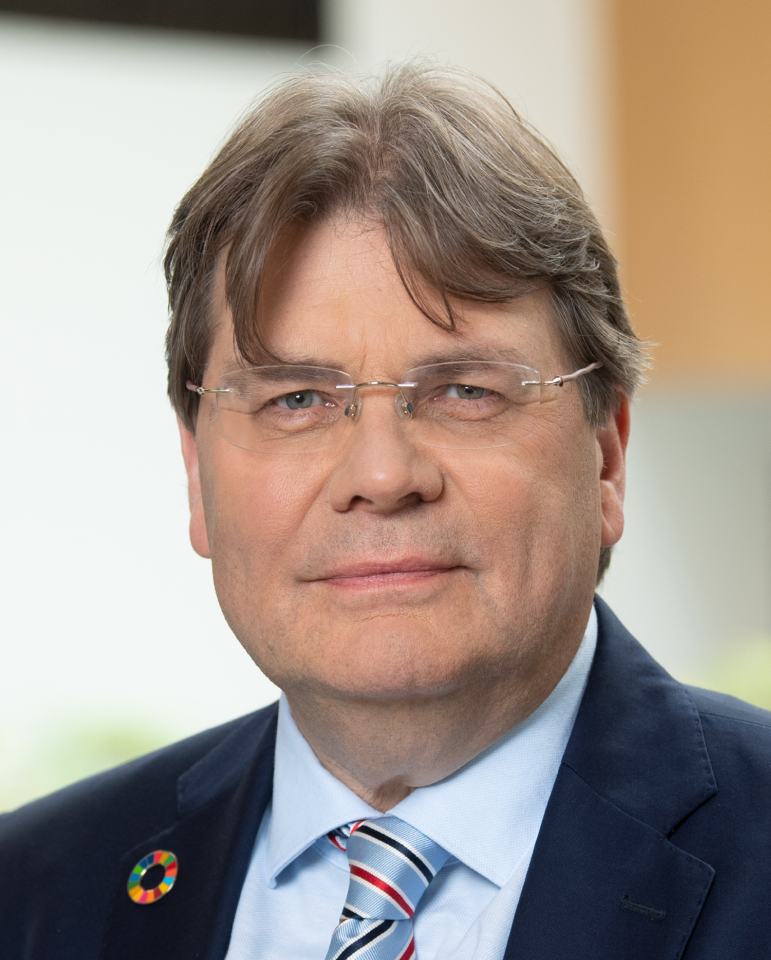
Esther works at the intersection of industry, policy, and technology to accelerate the transition toward circular materials systems. In this keynote, she will explore how circular carbon can help defossilize industry by converting plastic waste, biomass, and CO₂ into competitive plastics, chemicals, and fuels. By linking scale-up-ready conversion technologies to viable value chains, she will highlight how circular solutions can reduce fossil dependency, lower CO₂ emissions, and unlock new opportunities for growth in a rapidly evolving circular economy.
Industrial Decarbonisation: From Ambition to Implementation
CTO & Sustainability Officer at Nobian
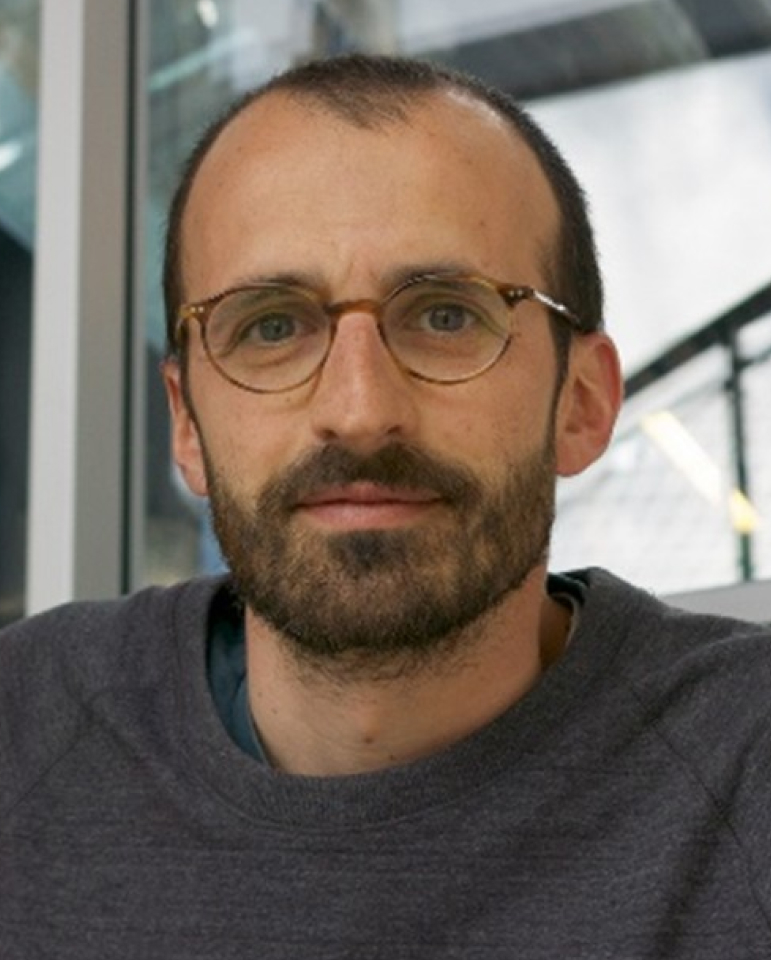
As CTO and Sustainability Officer at Nobian, Marco Waas leads the company’s technology and sustainability agenda as it advances toward climate-neutral chemical production. In his keynote, he will reflect on how industrial decarbonisation moves from strategy to implementation, highlighting the role of established industry in enabling new value chains and the importance of collaboration between industry, startups, and research to turn climate ambitions into scalable solutions.
Engineering Cyanobacteria for Sustainable Industrial Biotechnology
Assistant Professor, Microbial Biotechnology & Systems Biology at University of Amsterdam
Filipe is an Assistant Professor at the Swammerdam Institute for Life Sciences (SILS), University of Amsterdam. His research sits at the interface of synthetic biology, systems biology, and metabolic engineering, with a particular focus on developing cyanobacteria as sustainable microbial cell factories. He is widely recognized for his work on genome-scale modelling and rational strain design for industrial biotechnology applications.
Speakers and hosts
Coffee Break
Time for coffee – but not for relaxing!
Take the opportunity to explore the company stands at the career fair, connect with industry representatives, and discover exciting career paths. Whether driven by scientific curiosity or professional ambition, this is your moment to network and build meaningful connections.
Speakers and hosts
1A: Scaling Circular Industry
From Pilots to Infrastructure, Policy & Industrial Reality
Why do so many promising circular and sustainable chemistry initiatives struggle to scale, even when the technology works and the ambition is high?
This session dives into the real-world challenges of industrial scale-up. Based on research from MNEXT and Avans into recurring system-level barriers, we explore what actually slows down circular transitions: infrastructure gaps, regulatory complexity, value chain misalignment, financing structures, and ecosystem coordination.
Through a short scene-setting introduction followed by a dynamic panel discussion, representatives from industry, the Port of Amsterdam, and emerging scale-up ventures will share practical insights from the field. Together, we examine what it truly takes to move from pilot projects to large-scale implementation, and how industry, policy, and ecosystem actors can better align to accelerate circular transformation.
If you care about making circular chemistry work in practice, not just in theory, this session is for you.
Speakers and hosts

1B: From Models to Medicine
Validating Alternative Systems for Next-Generation Drug Development
Innovative preclinical models are reshaping how therapeutics are discovered, tested, and translated into the clinic. Advances in organoids, organ-on-chip platforms, advanced in vitro systems, imaging-based quality control, and computational modeling offer powerful alternatives to traditional animal models. However, their predictive value, validation, and regulatory acceptance remain critical challenges.
This session will explore how alternative systems can be rigorously validated and integrated into drug development pipelines. Speakers from academia and industry will discuss strategies to enhance physiological relevance, establish quality standards, and accelerate the transition from experimental models to clinically actionable therapies.
Speakers and hosts


2A: Powering the Transition
The Talent Challenge Behind Hydrogen
The hydrogen economy is accelerating, but technology alone is not enough. Behind every electrolyser, storage system, and industrial transformation lies a critical question: do we have the right talent to make it happen?
This session explores the growing workforce challenge behind the hydrogen transition. As industries scale up production and infrastructure, new technical competencies, cross-disciplinary skills, and hybrid profiles are urgently needed.
Co-developed with partners of the H2Learn consortium, this session brings together industry, research, and training perspectives to discuss:
• Where are the biggest skills gaps in hydrogen today?
• What competencies will be essential in the next 5–10 years?
• How can academia and industry collaborate to prepare the next generation?
• What does scaling the hydrogen workforce realistically require?
Through interactive discussion and practical insights, this session connects students, professionals, and companies around one central theme: powering the transition means investing in people.
Speakers and hosts

2B: AMEC Spotlight Session
Driving Impact through Microbiome Innovation and Policy for Food & Health
In this Amsterdam Microbiome Expertise Center (AMEC) spotlight session, jointly organized by the Amsterdam Chemistry Network (ACN) and the Amsterdam Green Campus (AGC) for AMEC, we will explore how advances in microbiome research are shaping food systems and public health policy. The discussion will highlight the latest scientific trends, including microbiome-informed nutrition, gut-health interventions, and sustainable food innovation, and how these developments increasingly influence regulatory and policy frameworks.
Looking ahead, the session will examine future directions in microbiome science and what these mean for policymakers and industry. We will also address emerging industrial trends, including microbiome-based product development, functional ingredients, biotech-enabled food innovation, and the growing convergence of health, sustainability, and regulation in this rapidly evolving sector.
Speakers and hosts



Closing ceremony
Speakers and hosts
Drinks and networking
Speakers and hosts
%20(1).jpg)


Career fair & Job market











.avif)



Company Pitches
Discover your future employer, get to know top companies in the chemical industry, pharma sector, and startup ecosystem. As they showcase their work, culture, and career opportunities, you will hear directly from recruiters and employees about what they’re looking for in a new hire.
Each company presents for 15 minutes in a continuous session (nobreaks), in the following order:
09:30 — V.O. Patents & Trademarks
09:45 — Lipton
10:00 — Brineworks
10:15 — ChainCraft
10:30 — AkzoNobel
10:45 — Sustanix
11:00 — SeaO2
11:15 — Caffe Inc.
11:30 — Da Vinci Laboratory Solutions
11:45 — TNO
Speakers and hosts
Panel Discussion
Challenges Faced by Early-Stage Scientific Entrepreneurs
Launching a science-based venture presents unique challenges that extend far beyond the laboratory. Early-stage scientific entrepreneurs must navigate funding landscapes, intellectual property strategy, regulatory pathways, team building, and the transition from proof-of-concept to scalable business models.
In this interactive panel discussion, founders and ecosystem experts will share candid insights from their own journeys. The conversation will address common pitfalls, decision-making under uncertainty, and practical strategies for moving from academic research to viable venture creation, offering valuable guidance for students and researchers considering the entrepreneurial path.
Speakers and hosts
Science communication that works
Your work doesn't speak for itself, but intentional communication does
Regardless of our career stage, we often needto introduce ourselves and our work to peers, potential employers, or thegeneral public. “My science should speak for itself” no longer cuts it intoday’s dynamic scientific landscape. Intentions matter. Santiago Gisler is ascientific writer, communicator, and coach with a PhD in molecular genetics whostudies how to best share complex information to different target audiences.
Speakers and hosts
Career Reflections
Navigating Transitions in Academia and Beyond
Dr. Joana Silva is a Principal Investigator at the Center for Molecular Medicine Utrecht (CMM), where she leads research on ribosome biology and cellular regulation after moving from her postdoctoral work in Amsterdam.
She will reflect on the challenges encountered while searching for a new position and the realities of career transition. Drawing on her leadership experience, including heading the DEI committee at the Netherlands Cancer Institute and her work toward a more inclusive research culture, her talk will be both personal and insightful. Her perspective will be particularly inspiring for students and early-career researchers navigating career transitions.
Speakers and hosts
Disenchanting the Energy Transition
Disenchanting the Energy Transition: Green, Sustainability and Other Magic Words
Many of the terms used in the energy transition, such as green, sustainable, or clean, shape how we imagine the future of industry and technology. But how often do we pause to question the assumptions behind these narratives?
This interactive workshop invites the chemistry community to reflect on the broader social, political, and ethical dimensions of the energy transition and the hydrogen economy. Through guided discussion and collective reflection, participants will explore questions such as: What do we mean by sustainability? Whose perspectives and interests shape these visions? And which trade-offs often remain invisible?
The session is facilitated by the Laboratory of Reflections, a collective creating space for dialogue on the often-overlooked entanglements and responsibilities within chemical and scientific practices.
Together, this workshop offers a moment to pause, question dominant narratives, and re-imagine the role of chemistry in shaping future energy systems.
Speakers and hosts
Company Pitches II
Each company presents for 15 minutes in a continuous session (nobreaks), in the following order:
14:30 — Nucleate
14:45 — NanoHybrids
15:00 — Oxford Global Resources
15:15 — Vooruit
Speakers and hosts
AI-Ready Chemistry: From Hype to Implementation
Bridging education, data, and real-world adoption in the chemical sciences
Artificial intelligence is rapidly transforming research and industrial innovation, but what does “AI readiness” actually mean for chemistry in practice?
In this 40-minute session, we explore how academic advances can translate into industrial impact. What infrastructure, data quality, organisational culture, and skills are truly required to implement AI successfully? What is currently slowing down wider adoption? And how will chemists and life-science professionals realistically work with AI in the coming decade?
By bringing together perspectives from education and industry, this session aims to move beyond ambition and towards practical, actionable insights for the next generation of AI-enabled scientists.